


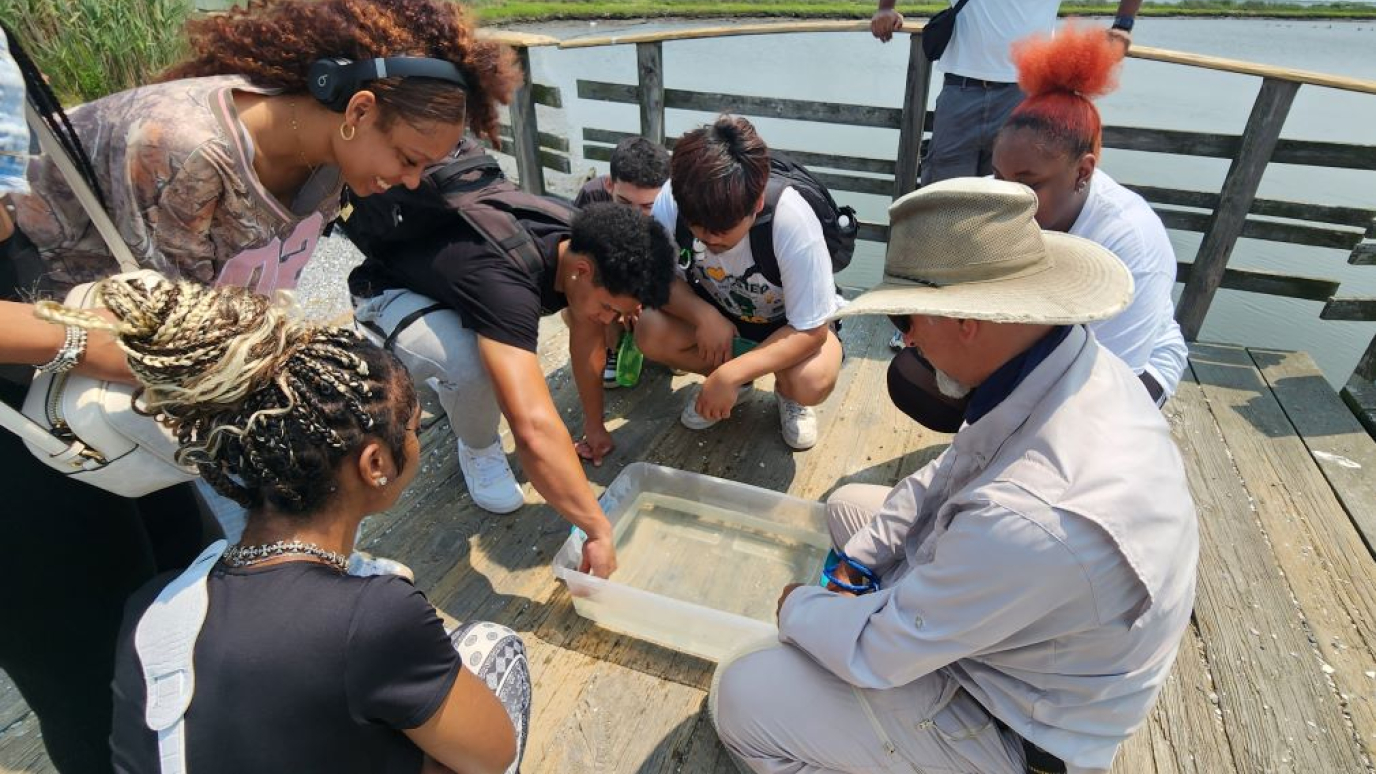
This summer, students from the Collegiate Science and Technology Entry Program at SUNY Old Westbury headed to the Marine Nature Study Area for a hands-on learning experience in the wetlands of Oceanside, Long Island.
Attended by the incoming first-year students in CSTEP, this annual immersive trip through the CSTEP Summer Bridge program taught students the importance of salt marshes to the ecosystem and protecting coastal waterways.
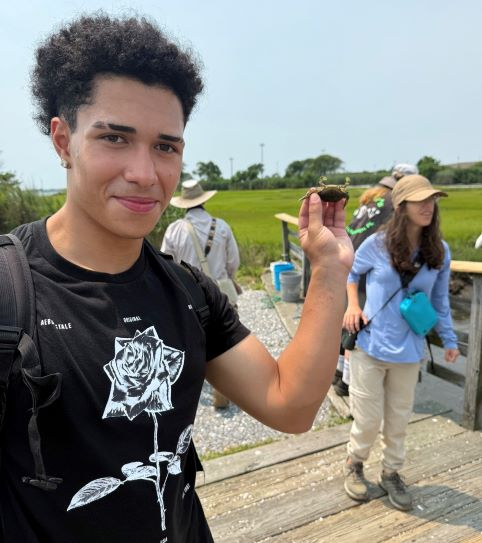
As they followed along the elevated walkways through the marshes, students engaged in a variety of experiential activities. Using cast nets, students were able to catch organisms in the marsh, assess them and determine the health of the marshland based on what was caught, which included small fish, glass shrimp and even a crab.
Students tested the oxygen content of water, learned about the role of the moon in tidal changes and observed tadpoles.
There's this type of wiring between the hand and the brain helping them understand and retain the information much better than just observing.”
- Patrick Cadet, co-director, CSTEP
“I liked observing the tadpoles,” said Accounting student Vren Pangilinan ‘30. “I just liked seeing how they were traveling around the river and the creatures around it.”
They learned about filtration adaptations of the grass in the salt marsh as the park ranger picked a stalk from the ground, slid it across his hand and licked the salt off to show how salt is filtered from the ocean water.
With taxidermized rodents in hand, the park ranger taught students about animal communication within the environment using vibrations and sound. “The ranger actually allowed us to go on the salt marsh and jump and see what it's like to be a rodent in that environment,” said Politics, Economics and Law student Beatrice Rodriguez ‘30.
For some of the students from New York City, this experience opened their eyes to new environments they may not have been exposed to before. "You'll hear about different environments, like a salt marsh, but to actually be in the environment is so much more exciting than just reading about it or hearing about it,” said Rodriguez, who resides in the Bronx.
Experiential learning opportunities, such as the activities of the trip, allow students to become highly engaged learners who ask questions, said Patrick Cadet, co-director of CSTEP. “There's this type of wiring between the hand and the brain helping them understand and retain the information much better than just observing,” he continued.
The CSTEP Summer Bridge Program aims to provide new students with an early start to their university experience through enrichment workshops, social activities and living on campus. Over the course of three weeks, students are introduced to academic classes and pursue a final research presentation, with this year’s theme being focused on the relation between agriculture and technology.
Like Rodriguez and Pangilinan, Psychology student Aaron Alvarez ‘30 seized every opportunity to get involved in the activities of the trip. The experiences of the CSTEP program have allowed him to grow as a student and peer. “I think CSTEP teaches leadership. I think it really opened me up to meeting more people because I used to be really, really closed in,” he said. “I got to know people with different backgrounds. I think it's made me a better person.”
Rodriguez wants to share her wisdom from the program with new students and help them with the transition. “I feel as if now this is knowledge that I can spread,” she said. “I mean, that's the point of knowledge. You're supposed to spread it.”
This year, CSTEP celebrates 40 years of student support on campus and has created a vast network of active learners who belong to one big family. Pangilinan said, “I feel like I'm with my people.”