


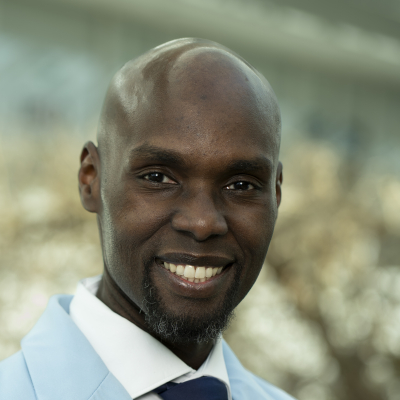
Dr. Mowaffaq Adam is a SUNY PRODiG+ Fellow in Biological Sciences at SUNY Old Westbury whose work integrates teaching, undergraduate research, cancer biology, environmental toxicology, and STEM mentorship. His research examines how environmental exposures and cellular metabolic changes influence cancer initiation and progression, with particular interests in DNA damage, epigenetic regulation, cancer-cell behavior, tumor biology, and the effects of environmentally relevant toxins and microbial metabolites.
Dr. Adam is deeply committed to undergraduate research and experiential science education. At SUNY Old Westbury, he mentors students in laboratory-based projects spanning cancer biology, environmental toxicology, molecular biology, microbiology, and emerging contaminants. His teaching emphasizes active learning, scientific reasoning, visual and model-based learning, authentic research experiences, and helping students develop the confidence to think and communicate as scientists.
His broader educational work includes curriculum development, Course-Based Undergraduate Research Experiences (CUREs), SEA-PHAGES, STEM outreach, biotechnology education, and mentoring students from high school through graduate training. He also contributes to initiatives supporting student belonging, inclusive STEM education, science communication, and pathways into biomedical careers.
- Basic Biological Sciences I (BS2400)
- Basic Biological Sciences I Laboratory (BS2401)
- SEA-PHAGES / Phage Discovery laboratory experiences. Undergraduate research and independent research mentoring.
- Cell Biology (BS4400) and Cell Biology Laboratory
- Molecular Biology (BS4560) and Molecular Biology Laboratory
- Food Safety: From Farm to Fork (BS2200)
An interdisciplinary biology course connecting microbiology, foodborne disease, environmental contaminants, public health, scientific reasoning, risk communication, and evidence-based decision-making.
- Ph.D. in Medical Oncology (2014–2019)
Universiti Sains Malaysia, Malaysia - M.Sc. in Microbiology (2007–2009)
Bangalore University, India - B.Sc. in Biotechnology (2003–2007)
Bangalore University, India
Postdoctoral Training
- Biology, Chemistry and Biochemistry — San Diego State University, San Diego, California | 2021–2024
- Infectious Diseases — Advanced Medical and Dental Institute, Universiti Sains Malaysia, Malaysia | 2019–2021
Selected Advanced Faculty and Research Training
- SEA-PHAGES Discovery Workshop — Howard Hughes Medical Institute | 2026
- Summer Nanopore Sequencing Workshop | 2026
- Supporting Neurodiversity Across the SUNY System | 2026
- Association of College and University Educators (ACUE) professional-development coursework | 2025–2026
- ASBMB Advocacy Training Program | 2024
- Faculty Mentor Training Program | 2024
- Advancing Inclusive Mentoring Program | 2024
- The Art of Science Communication — ASBMB | 2024
- Scientists Teaching Science — New York Academy of Sciences | 2023
- AACR Translational Cancer Research for Basic Scientists Workshop | 2023
- Hands-On CRISPR Genome Editing Training | 2017 and 2019
- SUNY Promoting Recruitment, Opportunity, Diversity, Inclusion and Growth Plus (PRODiG+) Fellowship | 2025–2027
- ASBMB Advocacy Training Program Delegate | 2024
- AACR Translational Cancer Research for Basic Scientists Workshop Recipient | 2023
- Universiti Sains Malaysia Fellowship | 2015–2018
At SUNY Old Westbury, Dr. Adam contributes to institutional research, student development, and campus service. His activities have included co-chairing the ICaRE Symposium, facilitating the ICaRE Summer Science Program, serving as a research-conference judge, and contributing to college-wide initiatives. He also participates in professional mentoring, STEM outreach, scientific peer review, science communication, and community engagement.
- Co-Chair — ICaRE Symposium, SUNY Old Westbury | 2026
- Program Facilitator — ICaRE Summer Science Program, SUNY Old Westbury | 2026
- Program Facilitator — ICaRE Summer Science Program, SUNY Old Westbury | 2025
- Workshop Presenter — STEM Diversity Summit, Farmingdale State College: “Why Trust Science: The Importance of Science and Cancer Research” | 2026
- Workshop Presenter — STEM Diversity Summit, Farmingdale State College: “Why Trust Science: The Importance of Science and Cancer Research” | 2025
- Panelist — Excellence in Research, Donald and Barbara Zucker School of Medicine at Hofstra/Northwell | 2025
- Mentor — AACR Special Program for High School Students: The Conquest of Cancer and the Next Generation of Cancer Researchers | 2024
- Featured — “Meet the 2024 ASBMB Advocacy Training Program delegates,” ASBMB Today | 2024
UNDERGRADUATE RESEARCH AND MENTORSHIP
Dr. Adam considers mentorship an integral part of both teaching and research. His undergraduate researchers participate in authentic scientific projects and progressively develop independence in literature evaluation, experimental design, laboratory technique, data interpretation, scientific writing, poster preparation, and oral presentation. His mentoring experience extends from undergraduate researchers at SUNY Old Westbury to high-school research teams, graduate trainees, and national STEM mentoring initiatives. His goal is to create research environments in which students develop not only technical skills, but also scientific confidence, ownership, collaboration, and professional identity.
RESEARCH SUPPORT AND STUDENT RESEARCH DEVELOPMENT
Dr. Adam has developed and supported undergraduate research projects through institutional and student-focused funding mechanisms, including SUNY Old Westbury's DEFT and OW STEAM initiatives. These projects provide students with opportunities to investigate questions spanning cancer biology, environmental toxicology, microbial ecology, molecular biology, sequencing, and scientific data analysis.
Dr. Adam's research focuses on understanding how environmental exposures influence cancer biology. His laboratory combines approaches from molecular biology, cell biology, microbiology, toxicology, biotechnology, and biochemistry to investigate how environmental toxicants and biologically active metabolites alter cellular behavior. Current areas of interest include environmental carcinogenesis, mycotoxins and emerging contaminants, DNA damage, epigenetic and histone regulation, oxidative stress, cancer-cell migration and metastasis, tumor microenvironment biology, and environmentally induced changes in cellular phenotype.
A major component of this research program is undergraduate participation. Students contribute to experimental design, mammalian cell culture, molecular and cellular assays, microscopy, sequencing and bioinformatics, data analysis, and scientific communication. The laboratory's broader goal is to connect mechanistic cancer research with questions of environmental exposure, public health, and cancer disparities while preparing the next generation of scientists.
Research Areas: Cancer Biology • Environmental Toxicology • Environmental Carcinogenesis • Mycotoxins • DNA Damage • Epigenetics • Histone Remodeling • Tumor Microenvironment • Metastasis • Molecular & Cellular Biology • Microbial Metabolites • Emerging Environmental Contaminants
PROFESSIONAL MEMBERSHIPS
American Association for Cancer Research (AACR)
American Society for Biochemistry and Molecular Biology (ASBMB)
American Society for Microbiology (ASM)
New York Academy of Sciences
Society for the Advancement of Chicanos/Hispanics and Native Americans in Science (SACNAS)
National Organization for the Professional Advancement of Black Chemists and Chemical Engineers (NOBCChE)
Black in Cancer
Selected recent and representative publications are listed below. A complete bibliography is available through NCBI My Bibliography.
1. Zhang, W., Zhang, H., Liao, Y., et al., including Adam, M. (2026). Microbial metabolites in tumor epigenetic regulation. iMeta. DOI / Article
2. Ahmad, F., Soelar, S.A., Adam, M.A.A., et al. (2025). MicroRNA isolation from urine: comparison of total RNA isolation (TRI) reagent and silica membrane-based extraction methods. Clinica Chimica Acta. DOI / Article
4. Zhang, H-L., Sandai, D., Zhang, Z-W., et al., including Adam, M.A.A. (2024). Elucidating the molecular basis of ATP-induced cell death in breast cancer: Construction of a robust prognostic model. World Journal of Clinical Oncology. DOI / Article
5. Zhang, H-L., Sandai, D., Zhang, Z-W., et al., including Adam, M.A.A. (2023). Adenosine triphosphate induced cell death: Mechanisms and implications in cancer biology and therapy. World Journal of Clinical Oncology. DOI / Article
6. Adam, M.A.A., Muhd Kamal, L.Z., Kanakal, M., et al. (2022). The effect of aflatoxin B1 on tumor-related genes and phenotypic characters of MCF7 and MCF10A cells. International Journal of Molecular Sciences, 23. DOI / Article
8. Lok, B., Adam, M.A.A., et al. (2021). The assimilation of different carbon sources in Candida albicans: Fitness and Pathogenicity. Medical Mycology, 59. DOI / Article
9. Adebayo, I.A., Gagman, H.A., Balogun, W.G., et al., including Adam, M.A.A. (2019). Detarium microcarpum, Guiera senegalensis, and Cassia siamea induce apoptosis and cell cycle arrest and inhibit metastasis on MCF7 breast cancer cells. Evidence-Based Complementary and Alternative Medicine. DOI / Article
10. Adam, M.A.A., Tabana, Y.M., Musa, K.B., & Sandai, D.A. (2017). Effects of different mycotoxins on humans, cell genome, and their involvement in cancer. Oncology Reports, 37. DOI / Article
EDUCATIONAL AND CAREER DEVELOPMENT MENTORS & ADVISORS
- Prof. Phillip Ortiz — The State University of New York
- Prof. Doblin Sandai—Universiti Sains Malaysia
- Prof. Muhammad Amir Bin Yunus — Universiti Sains Malaysia
- Dr. Mikella Robinson — San Diego State University
- Prof. Carrie House— San Diego State University
- Prof. Nina Leonhardt — National Center for Science and Civic Engagement
- Prof. Fernando Nieto — SUNY Old Westbury
- Prof. Duncan Quarless — SUNY Old Westbury
- Prof. Lorenz S. Neuwirth — SUNY Old Westbury
- Prof. Carolyn Dehner — Massachusetts College of Liberal Arts
- Prof. Paul Craig — Rochester Institute of Technology
- Prof. Lauren Genova — University of Delaware
- Prof. Adriana Pinkas-Sarafova — Suffolk County Community College
- Dr. Arlene T. Jackson — Suffolk County Community College
- Prof. Joseph Provost — University of San Diego