


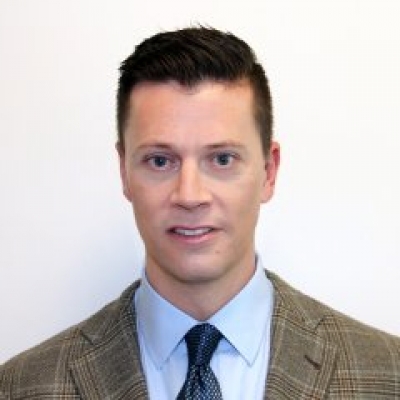
Dr. Marty Aaron Cooper
Associate Professor of Psychology | Licensed Psychologist | Researcher
State University of New York (SUNY) Old Westbury
Dr. Marty Aaron Cooper is an Associate Professor in the Psychology Department at SUNY Old Westbury, where he serves as Interim Director and core faculty member of the Graduate Mental Health Counseling (MHC) Program. He earned his Ph.D. in Counseling Psychology from Seton Hall University, an APA-accredited program, and holds a master’s degree in Mental Health Counseling from New York University.
Dr. Cooper’s teaching, scholarship, and clinical work are deeply informed by psychoanalytic and relational perspectives, with particular attention to culture, identity, and unconscious processes in individual and group life. His areas of specialization include LGBTQ+ mental health, trauma, multicultural competence, identity development, and group psychotherapy. His research explores the intersections of sexuality, culture, religion, and mental health, with peer-reviewed publications addressing topics such as transgender identity development, ageism, historical and intergenerational trauma, and psychodynamic approaches to social phenomena.
In addition to his role at SUNY Old Westbury, Dr. Cooper is a Fellow and candidate in psychoanalysis at New York University’s Postdoctoral Program in Psychotherapy and Psychoanalysis, where he has also served in supervisory and committee roles. He is the Editor of Group: The Journal of the Eastern Group Psychotherapy Society and has published psychoanalytic scholarship in journals such as Psychoanalytic Dialogues and Psychoanalytic Inquiry. His work frequently integrates relational psychoanalysis, group theory, and social justice frameworks.
Dr. Cooper brings extensive clinical experience from private practice, inpatient hospital settings, and international and human rights–based work. He is a licensed psychologist in New York, Connecticut, and Florida (telehealth), as well as a licensed mental health counselor in New York State. His clinical training includes psychoanalysis, group psychotherapy, cognitive and rational-emotive behavioral therapies, motivational interviewing, CBT for psychosis, and ketamine-assisted psychotherapy.
His dedication to teaching and mentorship has been recognized with the SUNY Chancellor’s Award for Excellence in Teaching. Dr. Cooper regularly presents nationally and internationally on psychoanalysis, trauma, LGBTQ+ mental health, group process, and culturally responsive clinical practice, and his work has been featured in national media outlets. Across his roles as educator, clinician, scholar, and administrator, he is committed to fostering inclusive learning environments and advancing mental health equity.
Undergraduate:
- PY4130 Field Experience & Research
- PH4450 Human Sexuality
Graduate:
- MH6500 Lifespan Development
- MH6530 Principles and Techniques of Counseling
- MH6130 Psychosocial and Cultural Perspectives: Theory & Practice I
- MH7110 Group Counseling
- MH7120 Psychosocial and Cultural Perspectives: Theory & Practice II
- MH7130 Clinical Internship in Mental Health Counseling I
- MH7530 Clinical Internship in Mental Health Counseling II
- MH6140 Practicum I
- MH6540 Practicum II
- 2015 Ph.D. Counseling Psychology-APA Accredited - Seton Hall University, South Orange, NJ
- 2009 M.A. Counseling for Mental Health and Wellness - New York University, New York, NY
- 2007 B.A. Double Major in Special Honors Curriculum, Psychology, Minor in Religion - Hunter College (CUNY) New York, NY
Additional Training
- 2021 (in progress) Psychoanalytic Training - New York University, Postdoctoral Program in Psychotherapy and Psychoanaylysis
- 2020 Training Program in Group Psychotherapy - Eastern Group Psychotherapy Society
- 2012-2015 Student Affiliate - William Alanson White Institute, Interpersonal Psychotherapy Workshop
- 2012 HIV Educator - American Psychological Association (APA), HIV Office of Psychology Education
- 2010 Dialectical Behavioral Therapy - New Jersey Psychological Association
- 2009 Motivational Interviewing - Center for HIV Educational Studies and Training, NY
- 2017 Certification National Counselor
- 2016 New York State Psychologist License
- 2011 New York State Mental Health Counselor License
- 2009 Certification Rational Emotive Behavior Therapy/Cognitive Behavior Therapy
- 2021 - SUNY Chancellor's Award for Excellence in Teaching
- 2021 - NYU Arnold Grossman Faculty Award
Fellowships
New York University, Postdoctoral Program in Psychotherapy & Psychoanalysis
Institute for Psychoanalytic Education, New York University School of Medicine
Past Awards:
New York University:
- Samuel Eshborn Service Award
Hunter College:
- Scholarship and Wellfare Fund, Helen Witmer Roth Scholarship for Graduate Studies
- Dean's Scholarship
- Alumni Association Scholarship
- The Livingston Welch Award for Service
Professional Service:
2024–Present
Committee Member, Colloquium Committee, NYU Postdoctoral Program in Psychotherapy and Psychoanalysis2024–Present
Editor, Group: The Journal of the Eastern Group Psychotherapy Society2022–Present
Committee Member / Volunteer Psychologist, Human Rights Committee, NYU Postdoctoral Program in Psychotherapy and Psychoanalysis2021–Present
Volunteer Psychologist, NYU Postdoctoral Program Collaboration with the American University of Afghanistan2019–Present
Volunteer Psychological Evaluator, HealthRight International (Human Rights Clinic)2017–Present
Volunteer Psychological Evaluator, Physicians for Human Rights2017–Present
Volunteer Psychologist, New York Medical Reserve Corps2016–Present
Committee Member, American Counseling Association (ACA), Professional Outreach Committee2015–Present
Mentor, American Psychological Association of Graduate Students (APAGS),
Committee on Sexual Orientation and Gender Diversity2023
Supervising Psychologist, Doctoral Externship Program, NYU Postdoctoral Program in Psychotherapy and Psychoanalysis2019–2021
Clinical Supervisor, Pride Healing Center, Long Island University2017–2022
Group Leader, Kings County Hospital Center, Brooklyn, NY2013–2015
Clinical Supervisor, Metropolitan Community Church of New York (Sylvia’s Place)2012–2015
Clinical Supervisor, The Space at Tompkins
Dr. Cooper’s research focuses on the intersections of culture, identity, and mental health, with a particular emphasis on LGBTQ+ experiences, trauma, and psychoanalytic processes in both individual and group contexts. His scholarship integrates relational and contemporary psychoanalytic theory with multicultural and social justice frameworks to examine how historical, cultural, and interpersonal forces shape psychological development, symptom expression, and therapeutic change.
A central area of Dr. Cooper’s work explores gender and sexual identity development, including transgender and gender-nonconforming experiences, sexual minority stress, and the impact of religion and culture on sexuality. He has also published extensively on ageism, intergenerational and historical trauma, and the psychological consequences of marginalization across the lifespan.
More recently, Dr. Cooper’s research has examined countertransference, dissociation, and unconscious processes in clinical work with trauma-exposed and displaced populations, including refugees and asylum seekers. His psychoanalytic scholarship extends to group process, authority, and social dynamics, reflecting his longstanding involvement in group psychotherapy training and editorial leadership.
Across his work, Dr. Cooper is committed to advancing clinically grounded, theoretically rigorous research that informs culturally responsive practice, counselor and therapist training, and mental health equity.
Invited Publications
[2] Cooper, M. A. (in press). Haunted groups: ghosts, authority, and gender: a response to Charalambides’ proposal for a group turn in psychoanalytic training. Psychoanalytic Inquiry. DOI:10.1080/1551806X.2026.2590411
[1] Cooper, M. A. (in press). Tattoos, tights, and ghosts: A queer Indigenous response to "A Peculiar People". Psychoanalytic Dialogues.DOI:10.1080/10481885.2025.2605431
Peer Reviewed Publications
[8] Benau, E.M., Jung, S., Vaughan, C., Cooper, M.A. (2025, March). Implicit biases toward aging-related stimuli corresponds with anxiety about aging and ageism: Evidence from a crowdsourced Go/NoGo Association Task. Social Cognition., 43(1), 17-39. https://doi.org/10.1521/soco.2025.43.1.17
[7] Cooper, M. A. (2024, April). Working with Afghan Students: Countertransference and Dissociated Processes of an Analyst in Training. Psychoanalytic Dialogues, 34(1), 126-130. doi: 10.1080/10481885.2023.2290279
[6] Cooper, M., Jung, S., & Gordon, J. (2022, July). Identity process treatment model for transgender and gender non-conforming clients. Studies in Gender and Sexuality. doi: 10.1080/15240657.2022.2072574
[5] Cooper, M. (2021, December). Role of religion in the expression of sexuality. Indian Journal of Health, Sexuality and Culture.https://www.iisb.org/pdf/december2021/14.%20Role%20of%20religion%20in%2…
[4] Cooper, M.A., & Gordon, J.L. (2021, April) Understanding panic buying through an integrated psychodynamic lens. Front. Public Health 9:666715. doi: 10.3389/fpubh.2021.666715
[3] Gordon, J., & Cooper, M. (2020, June). Transgender and gender non-conforming (TGNC) online dating experience. Indian Journal of Health, Sexuality and Culture, 06(1), 57-64. http://www.iisb.org/pdf/june2020/11.%20Transgender%20and%20gender%20non-conforming%20(TGNC)%20online%20dating%20experience.pdf
[2] Cooper, M., & Gordon, J. (2019, December). Relevance of drive and relational theories in the context of homosexuality and masochism: A case study. Indian Journal of Health, Sexuality and Culture, 05(2), 78-87. http://www.iisb.org/pdf/december2019/10_The%20Relevance%20of%20Drive%20and%20Relational%20Theories%20in%20the%20Context%20of%20Homosexuality%20and%20Masochism.pdf
[1] Cooper, M. (2019, June). Anti-Indian bias and homophobia: A psychotherapy case study. Indian Journal of Health, Sexuality and Culture, 05(1), 45-52. http://iisb.org/pdf/june2019/11.%20Anti-Indian%20Bias%20and%20Homophobi…
Book Chapters
[3] Beckstead, A. L., Metzler, S. C., Buspavanich, P., Morgan, E., Cooper, M.A. (2024, July). Develop your sexual/gender self-knowledge. In A. L. Beckstead, J. Cheng, S. Giwa, M. A. Yarhouse, & I. Žegura (Eds.) Feel secure in yourself (pp. 81-105). Rowman & Littlefield. https://www.bloomsbury.com/us/feel-secure-in-yourself-9781538190401/
[2] Cooper, M., Gordon, J., Fassinger, R. (2024, January). Mentoring. In A.E. Goldberg (Ed.). The SAGE Encyclopedia of LGBTQ Studies. SAGE. https://us.sagepub.com/en-us/nam/the-sage-encyclopedia-of-lgbtq-studies…
[1] Cooper, M., & Holland, B. (2019, October). Health Care. In Moglia, P. (Ed.), Salem Health: Aging (2nd ed., pp. 359-364). Salem Press.
Publications (non-reviewed)
[4] Cooper, M. (2025,01). Introduction. Group 48(2-3), 9-10. https://dx.doi.org/10.1353/grp.2024.a949681.
[3] Cooper, M. (2024/10). Introduction. Group 48(1), 7-8. https://dx.doi.org/10.1353/grp.2024.a938523.
[2] Baptiste, D.J.J., & Cooper, M.A. (2023). Editors’ Introduction. Group 47(3), 7-8.
https://dx.doi.org/10.1353/grp.2023.a916641.
[1] Cooper, M. (2023). Editor’s Introduction. Group 47(12), 9-10. https://dx.doi.org/10.1353/grp.2023.0001.
Media Interviews
[16] Koebert, J. (2026, January). The best U.S. cities to start your life over. FinanceBuzz. https://financebuzz.com/best-cities-to-start-over
[15] Skladany, J. (2025, June). How to know if you’re gay. Askmen. https://www.askmen.com/dating/dating-advice/how-to-know-if-youre-gay.html
[14] Taylor, J. (2024, April 1). Medical payments coverage (MedPay). WalletHub. (expert contribution published 2025, February 18). https://wallethub.com/edu/ci/med-pay/9255#expert=Marty_A._Cooper
[13] Mayer, B.A. (2024, February). 10 genius phrases to use instead of 'I'm Busy,' according to psychologists. Parade. https://parade.com/living/phrases-to-replace-saying-im-busy-according-to-psychologists
[12] Mayer, B.A. (2024, January). 13 helpful phrases to replace saying 'I Don't Know,' according to psychologists. Parade. https://parade.com/living/phrases-to-replace-saying-i-dont-know-according-to-psychologists
[11] Skladany, J. (2023, November). 5 tips to avoid mental burnout this holiday season. Teach:able. https://teachable.com/blog/avoid-holiday-burnout.
[10] Mayer, B.A. (2023, October). 12 common habits of people with high emotional intelligence, according to psychologists. Parade. https://parade.com/living/high-emotional-intelligence-habits-according-to-psychologists
[9] Mayer, B.A. (2023, October). 12 phrases To use when someone Is 'talking down' to you—and why they work, according to psychologists. Parade.https://parade.com/living/how-to-respond-to-condescending-people-according-to-psychologists
[8] Mayer, B.A. (2023, September). 15 phrases to disagree respectfully, according to psychologists. Parade. https://parade.com/living/phrases-to-disagree-respectfully-according-to-psychologists
[7] West, M. (2023, September). What to know about cognitive fatigue. MedicalNewsToday. https://www.medicalnewstoday.com/articles/cognitive-fatigue#management
[6] West, M. (2023, August). What is emotional self-harm? MedicalNewsToday. https://www.medicalnewstoday.com/articles/emotional-self-harm
[5] Simon, S. (2022, August). 5 sneaky and subtle signs you could have high-functioning anxiety. Fatherly. https://www.fatherly.com/health/high-functioning-anxiety-signs
[4] Skladany, J. (2022, February). Benefits from therapy that change the way you live life. Askmen.https://www.askmen.com/fitness/mental_health/benefits-from-therapy-that-change-the-way-you-live-life.html
[3] Valentino, J. (2021, October). Conscious Resettling: Moving Out to Save the Relationship. Giddy. https://getmegiddy.com/moving-out-save-relationship
[2] Fernando, C (2021, May). Panic buying gas? Stop it, experts say: Delivery supply chain likely return to normal by the end of weekend. USAToday. https://www.usatoday.com/story/news/nation/2021/05/12/colonial-pipeline-cyberattack-anxiety-gasoline-panic-buying/5059184001/
[1] Rose, M. (2020, October). You’re just not his tribe: rejection and the queer community. Gaytimes. https://www.gaytimes.co.uk/life/youre-just-not-his-tribe-rejection-and-the-queer-community/
Conference Proceedings
[8] Cooper, M. (2023, December). Training and competence in LGBTQ plus asylum assessment in the US. In International Journal of Psychology (Vol. 58, pp. 411-411). John Wiley & Sons.
[7] Linzer, E., & Cooper, M. (2019, October). The relationship between awareness of white heterosexual male privilege and gun culture. Proceedings from ISPRC’s The 19th Annual Diversity Challenge, Boston College, Boston, M.A. https://www.bc.edu/content/dam/bc1/schools/lsoe/sites/isprc/Diversity%20Challenge/2019%20DC%20Abstracts.pdf
[6] Cooper, M., & Jung, S. (2018, October). Utilizing STEM funding to develop graduate counseling students. Proceedings from ISPRC’s The Eighteenth Annual Diversity Challenge, Boston College, Boston, M.A.
[5] Jung, S., Falzarano, F., Cooper, M., Neuwirth, L., & Mukherji, R. (2018, March). Aging stimulation tools for undergraduate and graduate-level gerontological education. Proceedings from AGHE Annual Meeting. Atlanta, G.A.
[4] Cooper, M.A., & Khshaiboon, S. (2013). Race, culture, and mental health among Christian Arab Americans. Proceedings from ISPRC ’13: The Thirteenth Annual Diversity Challenge, Boston College, Boston, M.A.
[3] Cooper, M.A., & Khshaiboon, S. (2012). Violence and survival among gay and lesbian Arabs in the Middle East. Proceedings from ISPRC ’12: The Twelfth Annual Diversity Challenge, Boston College, Boston, M.A.
[2] Cooper, M.A., Berhe, Z., & Palmer, L. (2011). Proceedings from ISPRC ’11: The Eleventh Annual Diversity Challenge, Boston College, Boston, M.A.
[1] Cooper, M.A. (2007). Attachment styles among gay-identified male internet escort workers. Unpublished manuscript, Department of Psychology, Hunter College, New York, NY.
[41] Cooper, M., & Gerson, C. (2025, November 14). Developing authenticity and self-expression through writing. Presentation at the Eastern Group Psychotherapy Conference, New York, NY. https://egps.org/wp-content/uploads/2025/09/2025ConferenceBrochureFinal…
[40] Cooper, M. (2025, October 25). Engaging with ghosts: Mixed-race identity, historical trauma, and the analyst’s unseen terrain. Presentation at the New York University’s Postdoctoral Program in Psychotherapy and Psychoanalysis. Briarcliff Manor, NY.
[39] Cooper, M., & Matejka, O. (2025, June 19). Intrapsychic conflicts, historical trauma, and the analyst's position: Engaging with ghosts in the consulting room. In Kedem Ayalon, S. (Moderator), Inner Conflicts and Historical Traumas: War and Freedom via Relational Psychoanalysis [Panel]. 2025 The International Association for Relational Psychoanalysis and Psychotherapy (IARPP) Annual Conference. Athens, Greece. https://iarpp.ce-go.com/iarpp-conference-2025-athens/agenda
[38] Cooper, M., & Gerson, C. (2024, November 15). The value of writing in a time of turmoil. Presentation at the Eastern Group Psychotherapy Conference, New York, NY. https://egps.org/files/uploads/2024EGPSConferenceBrochure-Revised10.22…
[37] Herzog, D., Levy-Warren, M., & Slochower, J. (Presenters), & Cooper, M. (Moderator). (2024, September 20). Impasse and Breakdown in Community Discourse: A Psychoanalytic Perspective [Colloquium presentation]. New York University Postdoctoral Program in Psychotherapy & Psychoanalysis, New York, NY.
[36] Cooper, M.A., (2024, May 4). The invisible indigenous: America’s untold story of intergenerational trauma. Presentation conducted at the New Center for Psychoanalysis. Los Angeles, CA. https://www.n-c-p.org/cgi/page.cgi/_evtcal.html?evt=2618
[35] Grand, S., Cooper, M.A., Weathers, C., Biman, A. (2024, May 1). Transgenerational trauma: What we carry from our ancestors and how to break the cycle. In Bushatz, A. (Moderator), Lessons in recovery and resilience speaker series [Panel]. Tuesday’s Children Presents, Remote. https://give.tuesdayschildren.org/event/may-2024-speaker-series/e575675
[34] Lyons, L., Schwartz-Cooney, A., Cooper, M.A. (2023, July 27). Love, loss and terror: work with Afghan students and refugees. Panel presentation conducted at International Psychoanalytic Association 53rd Congress. Cartagena, Columbia. https://www.ipa.world/en/news_and_events/event_display.aspx?EventKey=EV…
[33] Cooper, M. (2023, June 7). Aspects of ageism among LGBTQIA+ individuals. Presentation conducted at Family Connections, Culture Connections 2023 conference. Montclair, NJ.
[32] Schwartz-Cooney, A., Lyons, L., Cooper, M.A. (2022, June 16). Love, loss and terror: Our work with Afghani students and refugees: A roundtable discussion. Conducted at the International Association for Relational Psychoanalysis and Psychotherapy conference. Los Angeles, N.Y.
[31] Cooper, M.A., Gardner-Schuster, E., Kring, B., & Schwartz, J. (2021, November 20). Writing for Publication: A Journey Towards Understanding Oneself. Half day workshop conducted at Eastern Group Psychotherapy Society 2021 Annual Conference. New York, N.Y.
[30] Cooper, M., Jung, S., & Gordon, J. (2021, November 13). Transgender and gender non-conforming identity process treatment model (TGNC-IPTM): psychoeducation for their support system. Presentation conducted at Institute for Contemporary Psychotherapy, The Psychotherapy Center for Gender and Sexuality’s 7th Biannual Conference: Transformations, New York, N.Y.
[29] Linzer, E., & Cooper, M.A. (2021, August 12-14). Bi+ intersectional identity's influence on awareness of privilege and attitudes towards guns. [Poster session]. 2021 American Psychological Association (APA) Convention, Washington, DC, United States. https://convention.apa.org/
[28] Cooper, M. (2021, July 18-23). Training and competence in LGBTQ+ asylum assessment in the US. In J. Koch (Chair), Issues related to training and education for international LGBTQ+ advocacy. The 32nd International Congress of Psychology, Prague, Czech Republic. https://www.icp2020.com/
[27] Schwartz, J., Cooper. M., & Kring, B. (2020, November 22). Writing for publication in times of crisis. Half day workshop conducted at Eastern Group Psychotherapy Society 2020 Annual Conference. New York, N.Y.
[26] Linzer, E., & Cooper, M. (2020, August 6-9). Understanding gender differences in the relationship between awareness of privilege and attitudes towards guns. [Poster session]. 2020 American Psychological Association (APA) Convention, Washington, DC, United States. https://convention.apa.org/
[25] Kaur, G., Fontana, s., Cooper., M., & Jung, S. (2020, August 6-9). Aging simulation suit to promote college students empathy toward older adults: A pilot study. [Poster session]. 2020 American Psychological Association (APA) Convention, Washington, DC, United States. https://convention.apa.org/
[24] Cooper, M., & Jung, S. (2020, July16-17). Transgender identity development: The role of assimilation and accommodation [Oral presentation]. Preaching to the Choir 2020: An International LGBTQ Psychology Conference. Prague, Czech Republic. https://cpasogii.com/preach2020. *This conference was moved to a remote format due to COVID-19.
[23] Cooper, M. (2019, November). Reconsidering “problem group members” through a lens of impact on self and other. Half day workshop conducted at Eastern Group Psychotherapy Society 2019 Annual Conference. New York, N.Y.
[22] Linzer, E., Cooper, M. (2019, October). The relationship between awareness of white heterosexual male privilege and gun culture. Individual Presentation conducted at Diversity Challenge, Boston College, Boston, M.A.
[21] Cooper, M., Linzer, E. (2019, August). Ageism, social connectedness and assurance among lesbian, gay, and bisexual individuals. Poster presented at the Annual Convention of the American Psychological Association, Chicago, I.L.
[20] Gurinder, K., Gissel M., Cooper, M., & Jung, S. (2019, May) Undergraduate and graduate-level students’ experiences of aging simulation suit. Poster presented at the Association for Psychological Science, 21st APS Annual Convention. Washington, D.C.
[19] Cooper, M., Jung, S. (2019, March). Considering an alternate model of identity development in transgender clients. Presentation conducted at Institute for Contemporary Psychotherapy, The Psychotherapy Center for Gender and Sexuality’s 6th Biannual Conference: Transformations, New York, N.Y.
[18] Cooper, M. (2019, January). Case Studies in asylum assessment. Presentation conducted at SUNY Old Westbury Immigration Brown Bag Series, Long Island, N.Y.
[17] Cooper, M., Jung, S. (2018, October). Utilizing STEM funding to develop graduate counseling students. Individual Presentation conducted at Diversity Challenge, Boston College, Boston, M.A.
[16] Cooper, M.A. (2018, March). Arab men and the intersections of gender, sexual orientation, and culture. Presentation conducted SUNY Old Westbury as part of the Gender Talks series. Old Westbury, NY
[15] Cooper, M.A. (2018, March; 2016, December; 2016, February). Arab Americans: Treatment considerations. Training for APA accredited doctoral internship program at Kings County Medical Center, Department of Psychology. Brooklyn, N.Y.
[14] Cooper, M.A. (2016, January; 2015, November). Motivational interviewing. In-service training for psychiatric residents at Interfaith Medical Center, Department of Psychiatry. Brooklyn, N.Y
[13] Cooper, M.A. (2015, December). History of psychology: An overview of theory. In-service training for psychiatric residents at Interfaith Medical Center, Department of Psychiatry. Brooklyn, N.Y
[12] Cooper, M.A. & Ahmed, R. (2015, October). Psychological assessment. In-service training for psychiatric residents at Interfaith Medical Center, Department of Psychiatry. Brooklyn, N.Y
[11] Cooper, M.A. (2015, November). Psychiatric morbidity and mortality. In-service training for psychiatric residents at Interfaith Medical Center, Department of Psychiatry. Brooklyn, N.Y
[10] Cooper, M.A. & Khshaiboon, S. (2013, October). Race, culture, and mental health among Christian Arab Americans. Structured Discussion conducted at Diversity Challenge, Boston College, Boston, M.A.
[9] Cooper, M.A. & Palmer, L. (2013, August). Assessing the intersection of ageism and social relations among lesbian and gay individuals. Poster presented at the APA 121st Annual Convention, Honolulu, H.I.
[8] Cooper, M.A. & Khshaiboon, S. (2012, October). Violence and survival among gay and lesbian Arabs in the Middle East. Individual Presentation conducted at Diversity Challenge, Boston College, Boston, M.A.
[7] Cooper, M.A. (2012, August). Suicide among lesbian, gay, bisexual, transgender, and questioning individuals. In L. Palmer, (Chair), Suicidality across the lifespan: A minority perspective. Symposium conducted at the120th Annual Convention of the American Psychological Association, Orlando, Florida.
[6] Cooper, M.A. (2012, March). Introduction to motivational interviewing. In-service training at Maimonides Medical Center, Department of Psychiatry. Brooklyn, N.Y.
[5] Cooper, M.A., Berhe, Z., & Palmer, L. (2011, October). Ageism and the intersections of race within lesbian, gay, and bisexual individuals. Structured Discussion conducted at Diversity Challenge, Boston College, Boston, M.A.
[4] Dettle, K. L., Berhe, Z.B., Cooper, M.A., Jean Baptiste, J., Berk, E.T., & Khshaiboon, S. (2011, August). Facilitating a cognitive stimulation group for residents of an assisted living community. Poster presented at the APA 119th Annual Convention, Washington, D.C.
[3] Cooper, M.A. (2011, August). Family violence and compassion fatigue. In L. Palmer, (Chair), The Experience of Compassion Fatigue in Therapist Trainees. Symposium conducted at the 119th Annual Convention of the American Psychological Association, Washington, D.C.
[2] Grossman, A.H., Cooper, M.A., Aydin, F., Rothenberg, A., & Chan, J. (2009, August). Comparing protective and risk factors of lesbian, gay and bisexual youth seeking services. Symposium conducted at the APA 117th Annual Convention, Toronto, Canada.
[1] Grossman, A.H., Frank, J.A., & Cooper, M.A. (2010, July). Recreational sexual experiences among sexual minority and sexual non-minority youth entering services, Leeds Metropolitan University, UK.
- in office: Wednesdays: 10:30 am-12:30 pm. Remote hours: Tuesday 2-3pm, Thursday 11-12pm