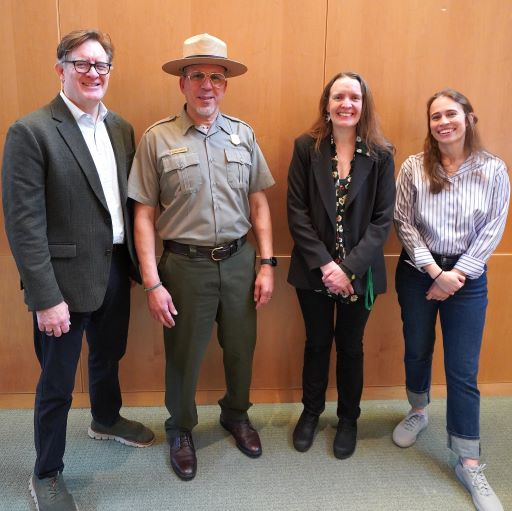


In celebration of Earth Day 2026, first-year students of SUNY Old Westbury came together for a hands-on trail cleanup that underscored a shared commitment to environmental stewardship. This effort not only improved the well-being and appearance of the wooded area, but also set the stage for a thought‑provoking presentation held later by Alexcy Romero ‘91, superintendent of the Fire Island National Seashore.
“These events together highlight the powerful connection between local action and regional conservation,” said Jesse Curran, assistant professor of English and director of the SUNY Old Westbury Campus Environmental Education Center.
Programming around Earth Day was coordinated and planned collaboratively by the Campus Environmental Education Center, the Green Committee, the Office of First-Year Experience and the Environmental Studies program offered through the History and Philosophy Department.
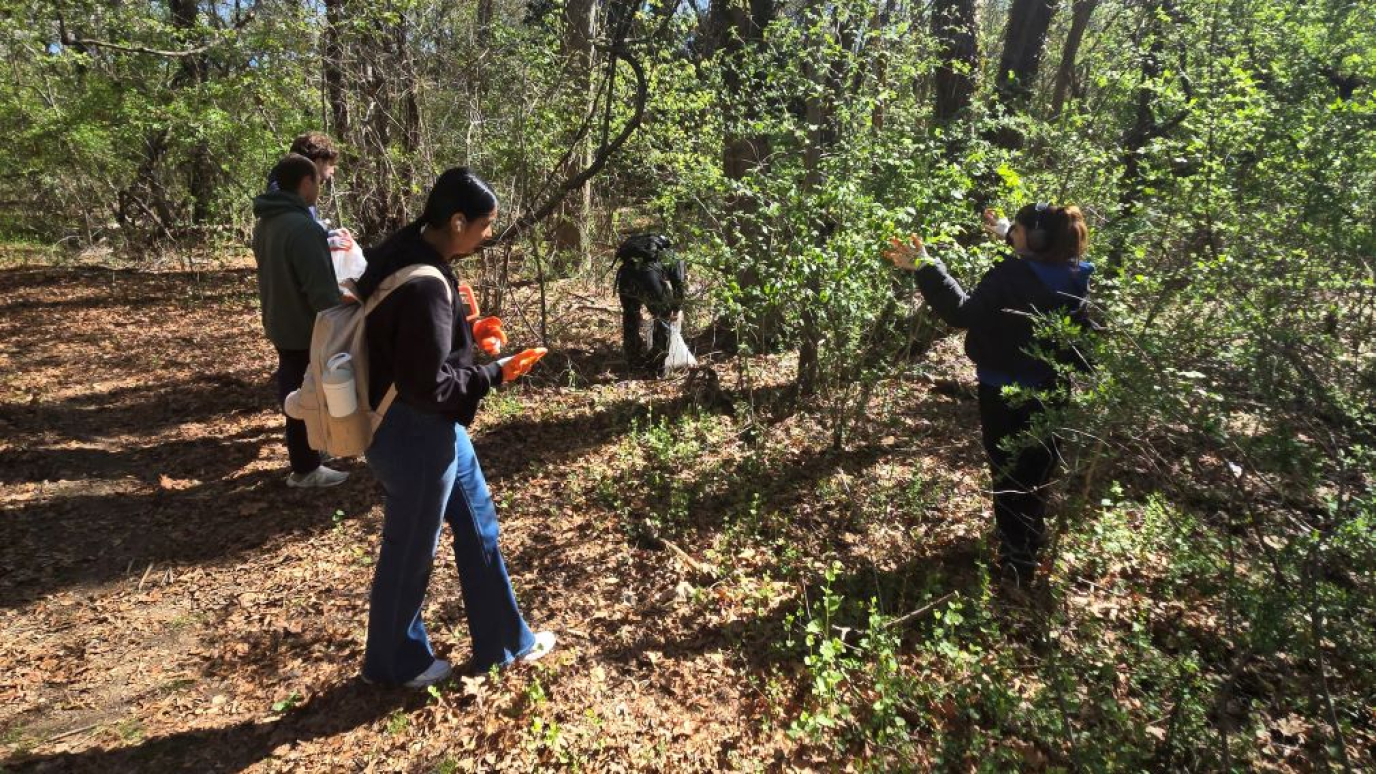
For the trail cleanup, students gathered at the Woodlands Residence Halls armed with gloves and trash bags. The group included students enrolled in Community Learning courses taught by Bonnie Eannone and Sydney Williams-Ruiz of the campus’ Office of First-Year Experience.
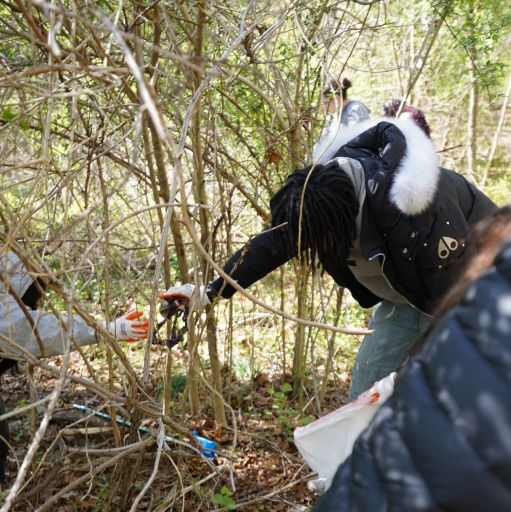
Over the course of several hours, the students removed litter, cleared debris, and helped restore the natural area that surrounds the residence hall complex. From discarded plastic bottles to fallen branches, the cleanup effort made an immediate and visible impact.
This was a great reminder for our newest students that caring for the environment starts right where you are. It’s easy to overlook how much of a difference a small action can make until you see the results firsthand.”
-- Bonnie Eannone
“This was a great reminder for our newest students that caring for the environment starts right where you are,” said Eannone, director of the Office of First-Year Experience. “It’s easy to overlook how much of a difference a small action can make until you see the results firsthand.”
The activity was organized through support from a “SUNY Outdoors for All” grant, awarded to the campus in fall 2025 in support of the programming via the Campus Environmental Education Center.
Talking ‘Cities and Seashores’
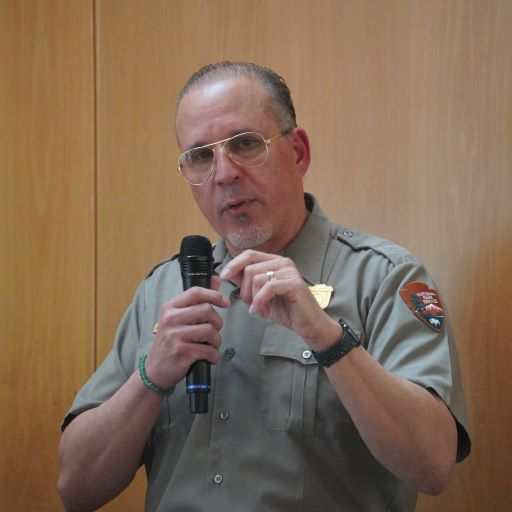
The campus’ Earth Day program continued later with Romero’s presentation, titled “Cities and Seashores.” SUNY Old Westbury was pleased to welcome Carter Strickland, SUNY’s chief sustainability officer and executive director of climate action, to participate in the session.
Romero’s discussion featured information on the National Park Service along with news about ongoing programming and activities at the more than 20,000-acre Fire Island National Seashore.
“We are in the forever business,” said Romero regarding the seashore, which is legislatively mandated to be managed in perpetuity. “We balance access versus preservation, and enjoyment versus conservation.”
During the presentation, he discussed the unique ecological role of Fire Island, addressing topics including the impact of rising sea levels, endangered species protection efforts, and the importance of balancing public access with conservation. Among the most visible current projects he reviewed is the seashore’s Threatened and Endangered Species Program, including its effort to protect piping plovers every March through August.
“Our shorelines are a popular breeding ground for piping plovers,” he said, noting that last year the area had 84 breeding pairs and more than 100 fledglings. “We attract more breeding pairs than any other area in the North Atlantic.”
He went on to describe the work of the biological technicians who monitor the birds throughout the season and discussed the often-controversial closing of beaches required to protect chicks early in their life cycles.
When closing, Romero encouraged students to consider careers and volunteer opportunities in the federal government in fields like environmental science, public service, and park management. He also looked back on his experience as a Biological Sciences student at Old Westbury.
My studies helped me understand the science behind it and that helped me understand the need for and process required to make science-based decisions.”
-- Alexcy Romero '89
“When I graduated college, there wasn’t a lot of talk about climate change,” he remembered. “My studies here didn’t teach me about park management and resource protection. But my studies helped me understand the science behind it and that helped me understand the need for and process required to make science-based decisions.”
As Earth Day concluded, one message resonated clearly: environmental stewardship is a shared responsibility that begins with showing up, lending a hand, and staying informed.
“Our Earth Day programming was meant to reinforce for our students the importance of our campus’ commitment to sustainability and environmental justice,” said Curran. “In both an experiential setting and through Alex Romero’s presentation, we hope to have given them a deeper appreciation for the natural spaces, both on campus and beyond, that enrich their lives.”